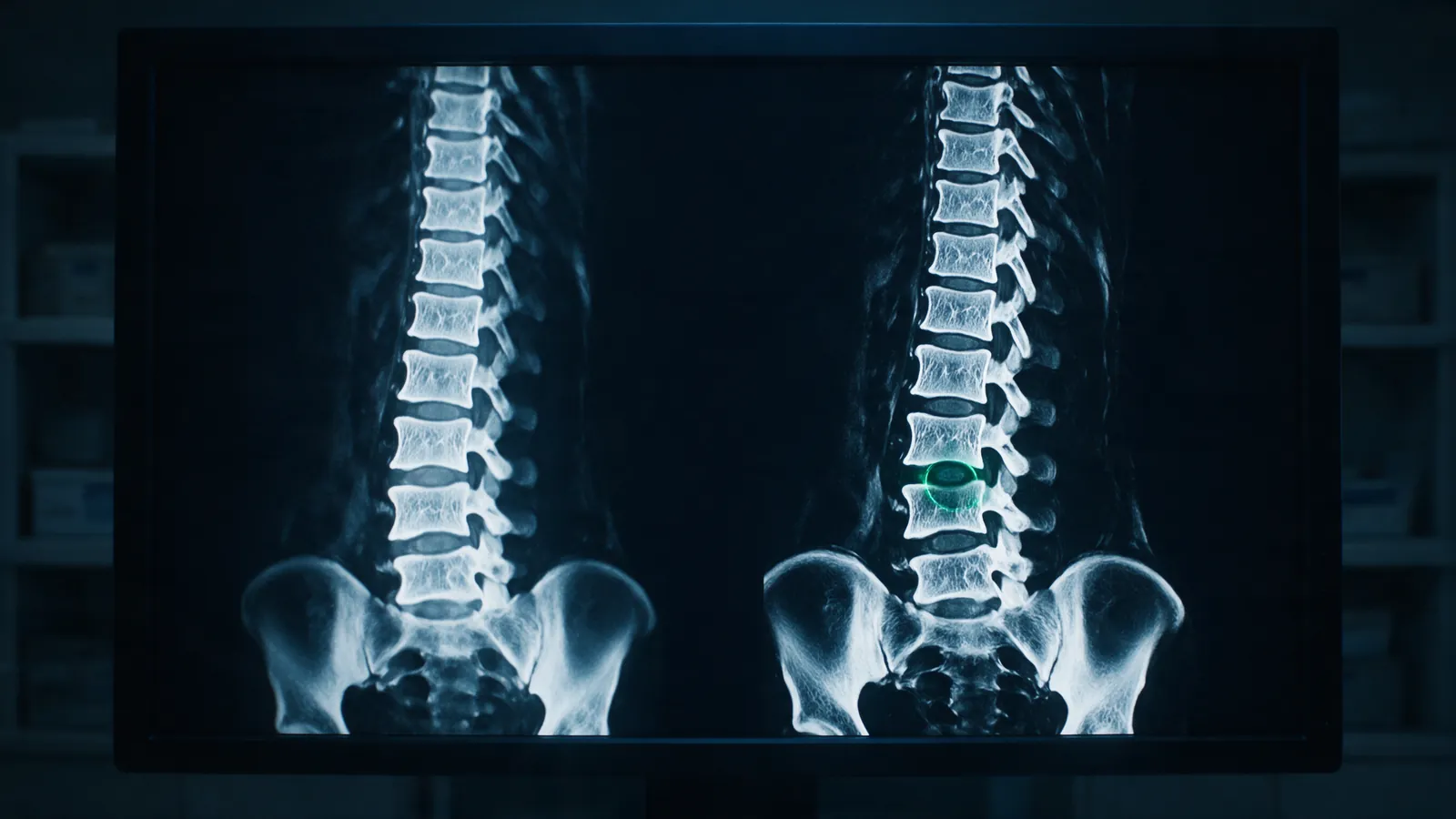
A pre-existing condition is a medical state that existed before the incident, whether or not it produced symptoms. A prior injury is an event that produced symptoms or treatment before the incident. Both matter in an injury case, and they matter differently. Degenerative disc disease on an MRI is a condition; a work-related back strain three years earlier is an injury. The defense will use either to argue that the current complaints predate the collision. The plaintiff's answer, where the record supports it, is that the condition was asymptomatic and the incident changed that. Everything depends on what the record shows about the period before.
The prior history is rarely in the records anyone thought to request. It is in the primary care chart, in a problem list that carries "chronic low back pain" from a visit six years ago. It is in the ED triage nurse's free-text: "hx of neck pain, sees chiro." It is in the intake questionnaire the patient filled out at the orthopedist's office, where the box for "previous injury to this area" is checked and initialed. It is in the pharmacy history, where a muscle relaxant was filled eighteen months before the incident. It is in a prior imaging report referenced by the radiologist as a comparison study. And it is in the therapy evaluation, where the therapist recorded "patient reports similar episode in 2021, resolved with PT."
None of those entries is on a page that a records vendor would put in the front of the binder, and none of them is in the specialist records that firms tend to read first. They surface when every page is read and every mention of the region at issue is indexed.
Imaging reports describe what the radiologist sees. Words like degenerative, chronic, spondylosis, osteophyte, and desiccation describe appearances that develop over years and cannot have been caused by an event a few weeks earlier. Words like acute, edema, hemorrhage, and fracture describe appearances consistent with recent injury. Many findings, including disc herniations, can be either, and the report alone will not settle it. Two things can: a prior study of the same region for comparison, and a clinician's reading of the description in context. A chronology that lists every imaging study with its findings, in order, makes the comparison possible without searching.
The legally useful framing in most jurisdictions is not whether a condition existed but whether the incident aggravated it or made a dormant condition symptomatic. That framing sends the reader back to the record with a specific question: what was the person's function and treatment in the months before the incident, and what were they after? The answer is in the mundane records. A primary care visit two months before with no mention of back pain, a full work history with no restrictions, no pharmacy fills for pain. Then, after: the ED visit, the restrictions, the therapy, the imaging. Laid out on one timeline, the before-and-after is the case. Left scattered across the production, it is an argument.
The defense reads the pre-incident record for any symptom, treatment, or imaging of the same region, then for anything that could produce the same complaints: a prior claim, a subsequent incident, a physically demanding job, a recreational injury. A prior claim in particular is searched for first, because claim histories are searchable and a prior claim for the same body part needs no further argument. Adjusters run these searches; defense firms should assume the plaintiff's own records will be checked against them.
Find the prior history before the defense does. Order the primary care records for at least several years before the incident, the pharmacy history, and any prior imaging. Have the whole production indexed for every mention of the region at issue. Where a prior complaint exists, the record usually also documents its resolution, and the resolution is the answer: the 2021 episode resolved with six weeks of therapy and did not recur until the collision. A prior injury with a documented recovery supports the aggravation theory rather than undermining it. A prior injury the plaintiff's own filings never mentioned is a credibility problem regardless of the medicine.
A well-built chronology does not editorialize about prior conditions; it indexes them. Each prior mention of the region appears as a timeline entry with the date, the provider, the language used, and the page. Flags identify entries that relate to the region at issue and predate the incident, prior imaging, prior claims or incidents mentioned in the record, and discrepancies between what the patient reported to different providers about their history. What those entries mean for causation is a question for a retained expert.
A condition is a state that existed before the incident, symptomatic or not, such as degenerative changes on imaging. A prior injury is an earlier event that caused symptoms or treatment. Both appear in the record differently and are argued differently.
Sometimes, and not from the report alone. Comparison with a prior study of the same level is the most reliable way. Certain descriptive terms in a report suggest chronicity or acuity, but the interpretation belongs to a clinician reading the study in context.
Long enough to cover the region at issue. Several years of primary care and pharmacy records before the incident is a common starting point, extended if the record references earlier treatment or a prior claim.
No. Aggravation and causation are expert opinions. NaviCase indexes what the record shows about the region before and after the incident so your retained expert can form that opinion from a complete picture.
Summary + Analysis flags each prior complaint involving the same region and the page it appears on.
Get Access